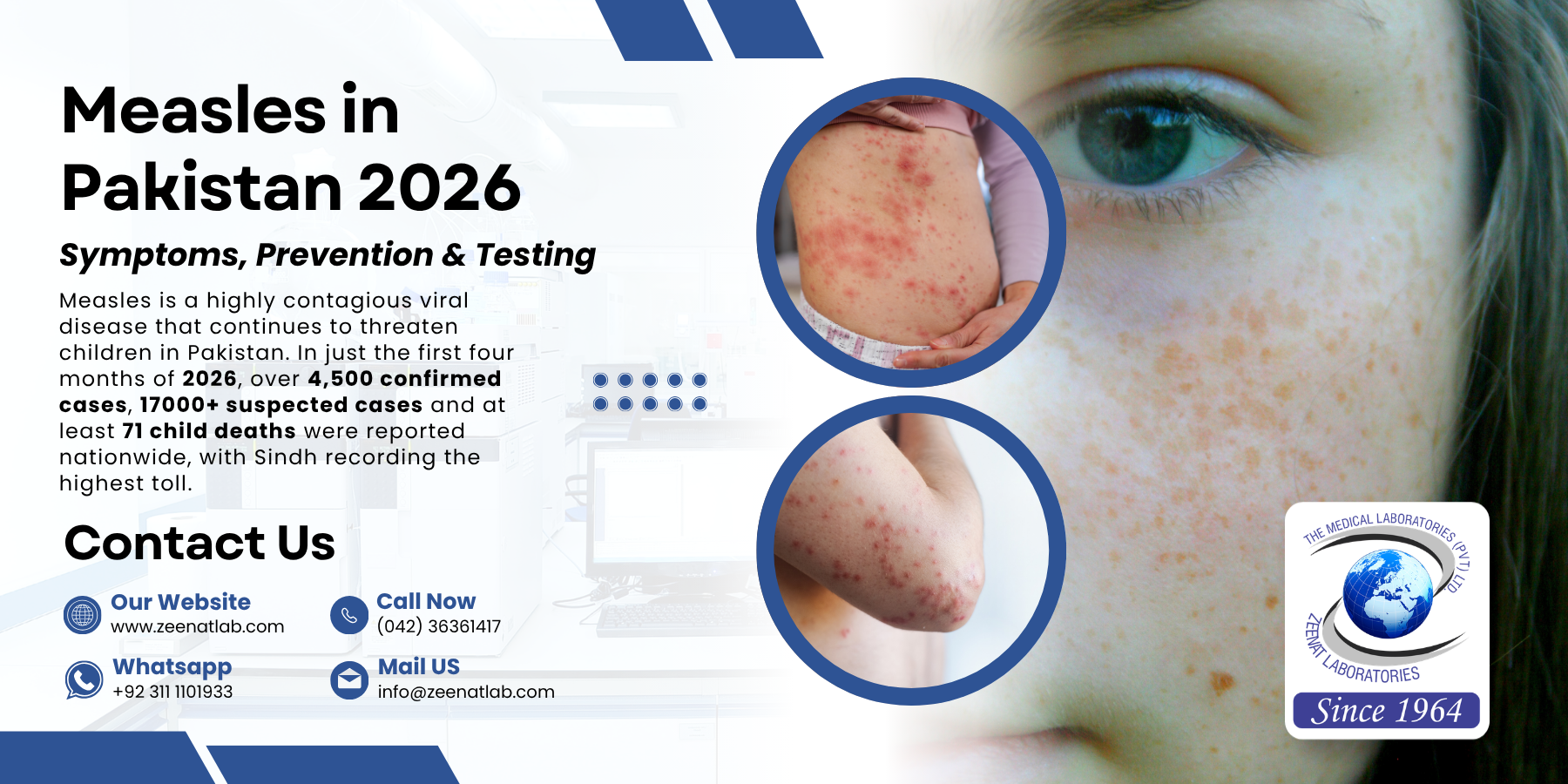
Measles is a highly contagious viral disease that continues to threaten children in Pakistan. In just the first four months of 2026, over 4,500 confirmed cases, 17000+ suspected cases and at least 71 child deaths were reported nationwide, with Sindh recording the highest toll. Despite a safe and effective vaccine, gaps in immunisation coverage remain the biggest challenge.
What is Measles?
- Measles is a serious airborne viral infection spread by coughing, sneezing, or close contact.
- One infected person can cause up to 18 secondary infections if others are unvaccinated.
- It primarily affects children but can infect anyone without immunity.
Measles in Pakistan (2026)
- Cases: 4,541 confirmed nationwide in the first quarter.
- Deaths: 71 children died between January–April 2026.
- Provincial toll: Sindh (40 deaths), Punjab (12), Khyber Pakhtunkhwa (12), Balochistan (4).
- Hotspots: Khairpur and northern Sindh districts face repeated outbreaks due to low vaccine coverage.
Symptoms
- High fever (often >104°F)
- Cough, runny nose, red watery eyes
- Koplik spots (tiny white spots inside the mouth)
- Rash spreading from face to body within 3–5 days
- Severe complications: pneumonia, encephalitis (brain swelling), blindness, diarrhea, and dehydration
Prevention
- Vaccination is the only effective prevention.
- Two doses of the measles vaccine (often given as MMR: measles, mumps, rubella).
- First dose at 9–12 months, second dose at 15–18 months.
- Vitamin A supplements reduce complications and risk of blindness.
- Community‑wide immunisation campaigns are essential to stop outbreaks.
Tests & Diagnosis
- Blood tests to detect measles antibodies.
- Throat/nasal swabs for viral confirmation.
- CBC (Complete Blood Count) to monitor complications like low white cells or dehydration.
👉 Book your CBC and measles antibody tests with Zeenat Lab today to ensure timely diagnosis and protection for your family.
Challenges in Pakistan
- Zero‑dose children: Over 1 million Pakistani children remain unvaccinated.
- Vaccine hesitancy: Misinformation and mistrust in some communities.
- Access gaps: Remote areas and conflict zones hinder routine immunisation.
- COVID‑19 disruptions: Pandemic created a backlog of unvaccinated children, fueling outbreaks.