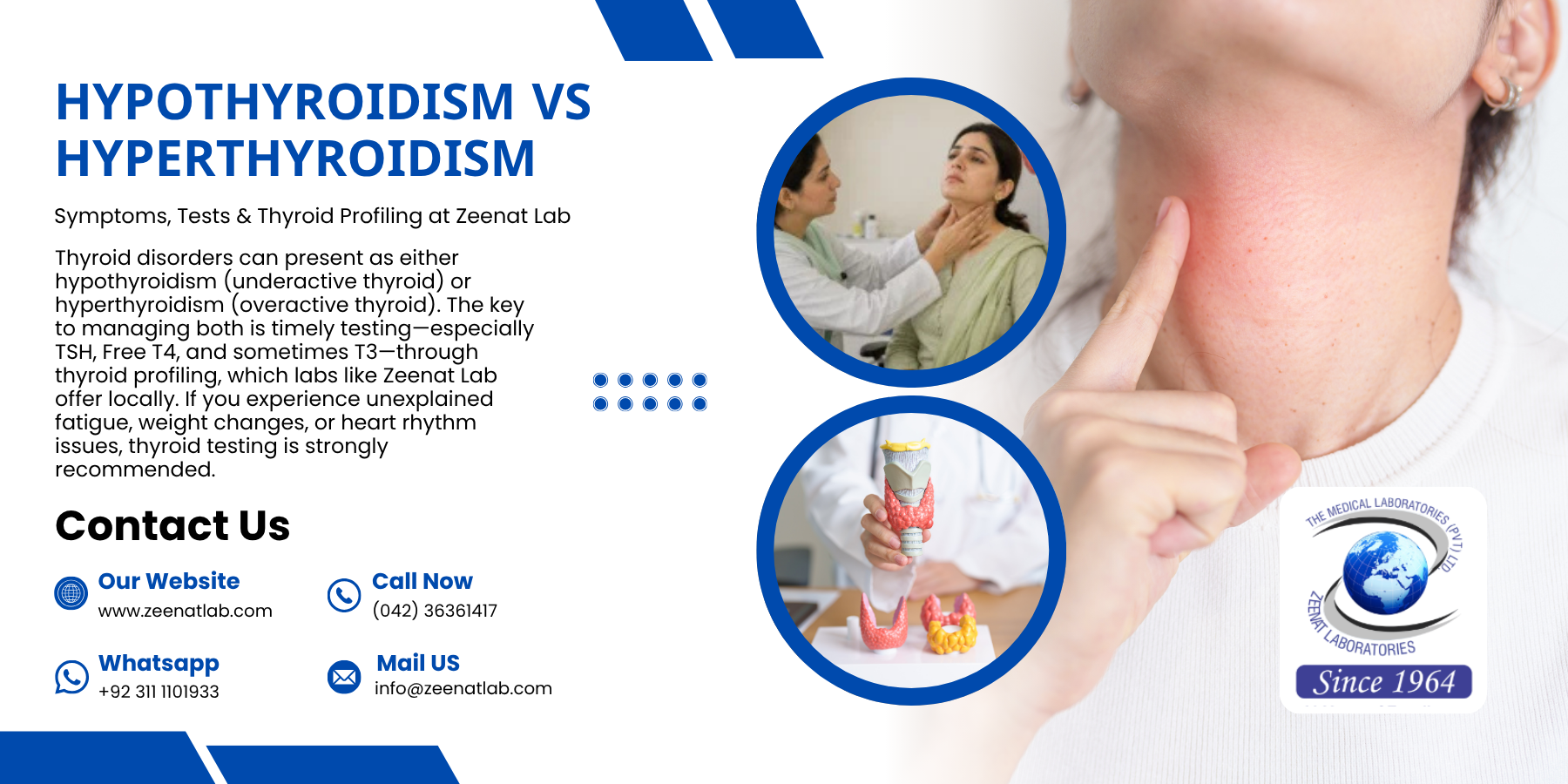
Thyroid disorders can present as either hypothyroidism (underactive thyroid) or hyperthyroidism (overactive thyroid). The key to managing both is timely testing—especially TSH, Free T4, and sometimes T3—through thyroid profiling, which labs like Zeenat Lab offer locally. If you experience unexplained fatigue, weight changes, or heart rhythm issues, thyroid testing is strongly recommended.
🧬 Hypothyroidism vs Hyperthyroidism
| Aspect | Hypothyroidism (Underactive) | Hyperthyroidism (Overactive) |
| Cause | The thyroid produces too little hormone (often due to Hashimoto’s disease, iodine deficiency, surgery, or medications). | The thyroid produces too much hormone (often Graves’ disease, thyroid nodules, thyroiditis). |
| Metabolism Effect | Slows metabolism. | Speeds metabolism. |
| Common Symptoms | Fatigue, weight gain, constipation, dry skin, hair thinning, depression, cold intolerance, and slow heart rate. | Weight loss, rapid heartbeat, tremors, sweating, anxiety, irritability, heat intolerance, and frequent bowel movements. |
| Complications | Goiter, infertility, heart disease, peripheral neuropathy, and myxedema coma (rare, life-threatening). | Atrial fibrillation, heart failure, osteoporosis, thyroid eye disease, thyroid storm (life-threatening). |
🔬 Important Thyroid Tests
- TSH (Thyroid Stimulating Hormone): First-line test; high in hypothyroidism, low in hyperthyroidism.
- Free T4 & Free T3: Measures circulating thyroid hormones.
- Thyroid Antibodies (Anti-TPO, TRAb): Detect autoimmune causes like Hashimoto’s or Graves’ disease.
- Ultrasound / Radioactive Iodine Uptake Scan: Used if nodules or goiter are suspected.
👉 Zeenat Lab offers thyroid profiling packages that typically include TSH, Free T4, and sometimes antibody testing.
📍 When to Get Tested
You should consider thyroid profiling if you have:
- Persistent fatigue, weight gain/loss, or mood changes.
- Irregular heartbeat, palpitations, or unexplained anxiety.
- Neck swelling or visible goiter.
- Menstrual irregularities or fertility issues.
- Family history of thyroid disease.
Regular monitoring is also essential if you already have a thyroid diagnosis or are on thyroid medication.